
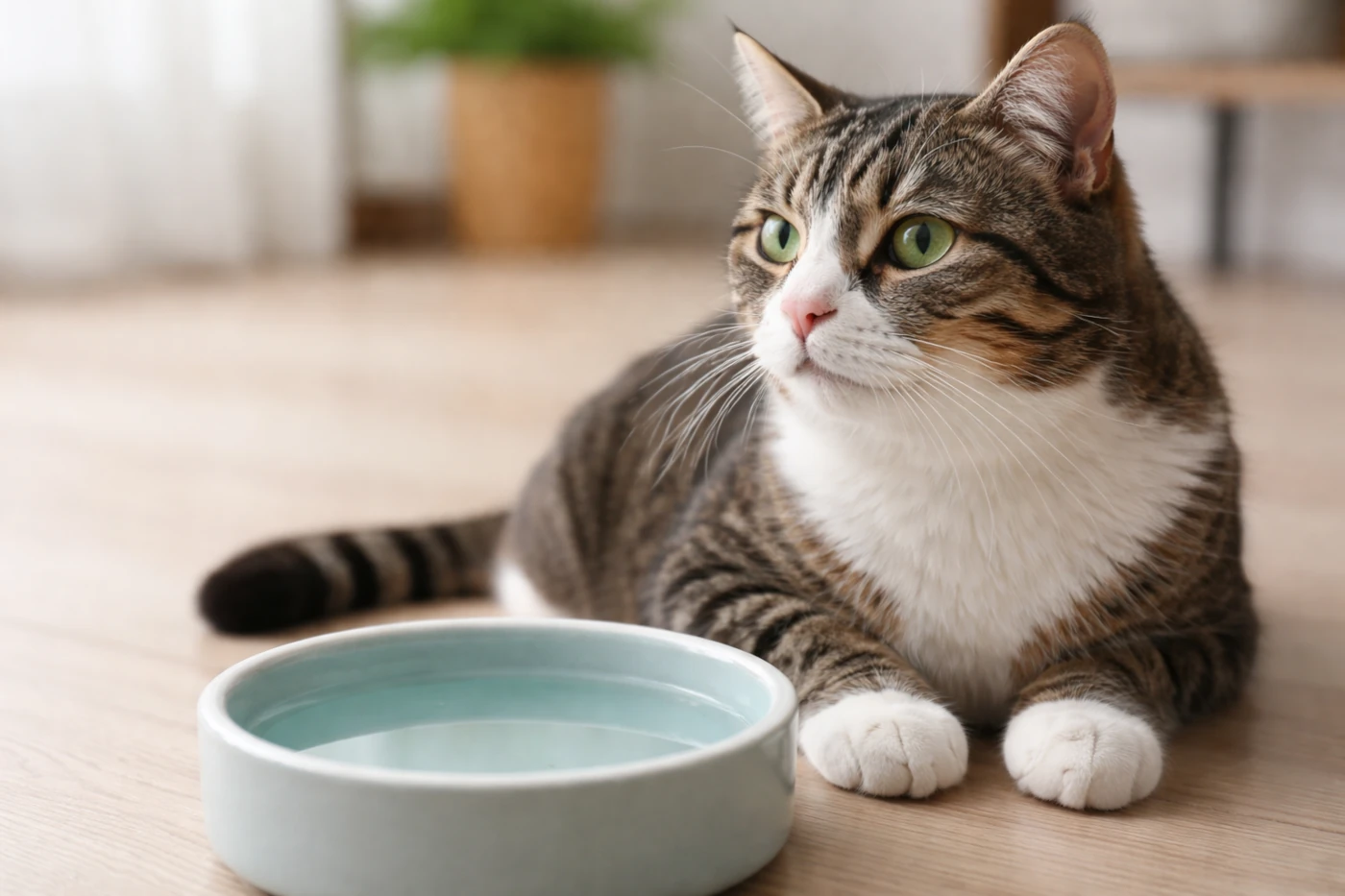
If you’ve ever watched your cat walk right past a full water bowl without taking a single sip, you’re not alone. Cat dehydration is one of the most underestimated health issues among domestic cats — and it can lead to serious kidney disease, urinary tract infections, and digestive problems if left unaddressed.
As a pet health expert, I see this concern come up constantly from Canadian cat owners, especially during dry winter months when indoor heating drops humidity levels. The good news? Once you understand why your cat won’t drink water, the solutions are simple and affordable.
Let’s break it all down.
1. Cats Are Biologically Wired to Get Water from Food
Here’s something most cat owners don’t know: domestic cats descended from desert-dwelling wild ancestors who rarely drank standing water. Instead, they got almost all their hydration from the moisture in raw prey — mice, birds, and small animals that are approximately 70% water.
This evolutionary background means cats have a naturally low thirst drive. Their kidneys are extremely efficient at concentrating urine, which helped them survive in arid environments. But this same trait means they are prone to chronic, low-grade dehydration when fed exclusively dry kibble, which contains only 8–10% moisture. According to the Cornell Feline Health Center, adequate hydration is critical to preventing kidney disease — the second most common cause of death in cats over 5 years old.
2. The Most Common Reasons Your Cat Refuses to Drink
a) The Water Is Too Close to Their Food or Litter Box
In the wild, water sources contaminated by food or waste are unsafe to drink. Cats are hardwired to avoid water placed near their food bowl for this reason. If your cat’s water sits right next to their food, move it to a completely different area of your home — even a different room.
b) They Don’t Like Still, Stagnant Water
Cats are attracted to running or moving water because, in nature, still water is more likely to be contaminated. This is why so many cats prefer to drink from a dripping tap. A circulating cat water fountain can solve this problem immediately.
c) The Bowl Material Affects the Taste
Plastic bowls harbour bacteria in microscopic scratches and can leach chemicals that alter the taste. Many cats refuse to drink from plastic. Stainless steel, ceramic, or glass bowls are significantly better choices.
d) The Water Isn’t Fresh Enough
Cats have an acute sense of smell — far superior to ours. Water that has been sitting in a bowl for more than 24 hours can smell of chlorine, dust, or saliva. Change your cat’s water at least once daily, and wash the bowl every day.
e) An Underlying Medical Issue
Paradoxically, some cats drink less when they’re not feeling well. Dental pain, nausea, and kidney disease can suppress drinking. If your cat suddenly stops drinking and also shows signs of lethargy or weight loss, consult your veterinarian promptly.
3. Signs of Dehydration in Cats — Don’t Ignore These
How do you know if your cat is already dehydrated? Watch for these warning signs:
- Skin turgor test: Gently pinch the skin at the back of the neck. In a hydrated cat, the skin snaps back immediately. If it stays tented for 1–2 seconds, your cat may be mildly dehydrated.
- Dry, sticky gums: A healthy cat’s gums are moist and slightly slippery. Dry or tacky gums are a red flag.
- Sunken, dull eyes: Well-hydrated cats have bright, alert eyes. Sunken eyes suggest significant dehydration.
- Lethargy and loss of appetite: Dehydrated cats often become listless and lose interest in food.
- Decreased urination: If you’re noticing less urine in the litter box or very dark, concentrated urine, this is a concern.
According to VCA Animal Hospitals, even 5% dehydration can cause noticeable clinical signs. At 10–12%, it becomes a life-threatening emergency.
4. How to Get Your Cat to Drink More Water — Proven Solutions
Switch to Wet Food (or Add Water to Dry Food)
The most impactful change you can make. High-quality wet food is 70–80% water — almost identical to the moisture content of natural prey. Even replacing one daily meal with wet food can significantly boost your cat’s hydration. If your cat eats exclusively dry food, try adding a few tablespoons of warm water or low-sodium chicken broth to their kibble.
Move the Water Bowl Away from the Food
Place water bowls in multiple locations around the house — in the bedroom, the living room, the hallway. Having several water stations increases the probability your cat will drink simply by passing by.
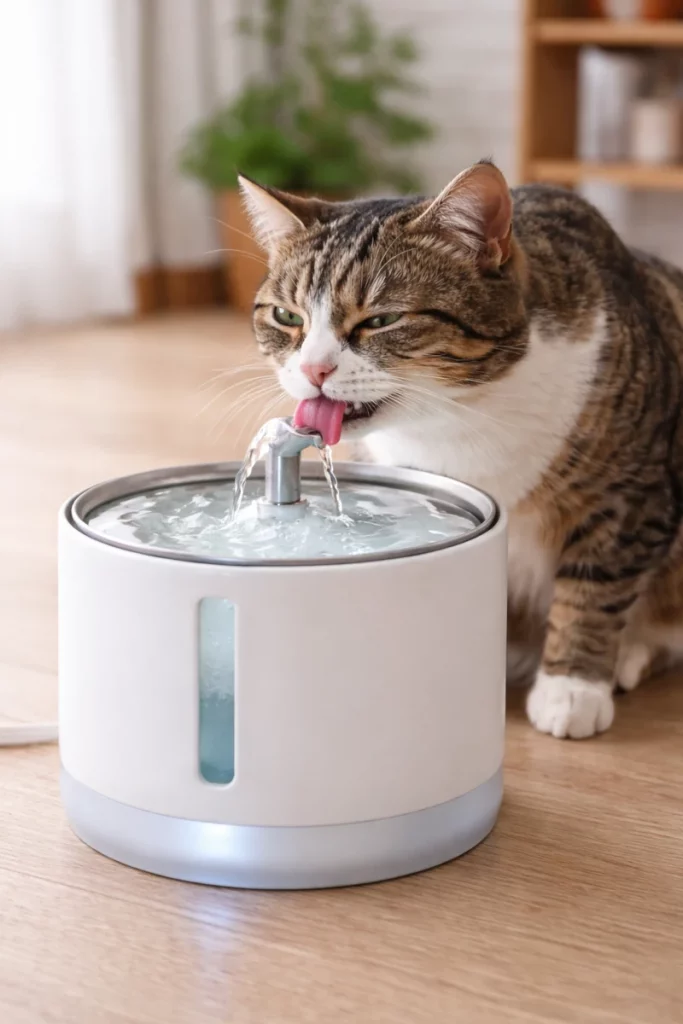
Use a Pet Water Fountain
This is the single most effective tool for cats that prefer running water. A circulating fountain keeps water oxygenated, filtered, and in constant motion — everything that triggers a cat’s natural drinking instinct.
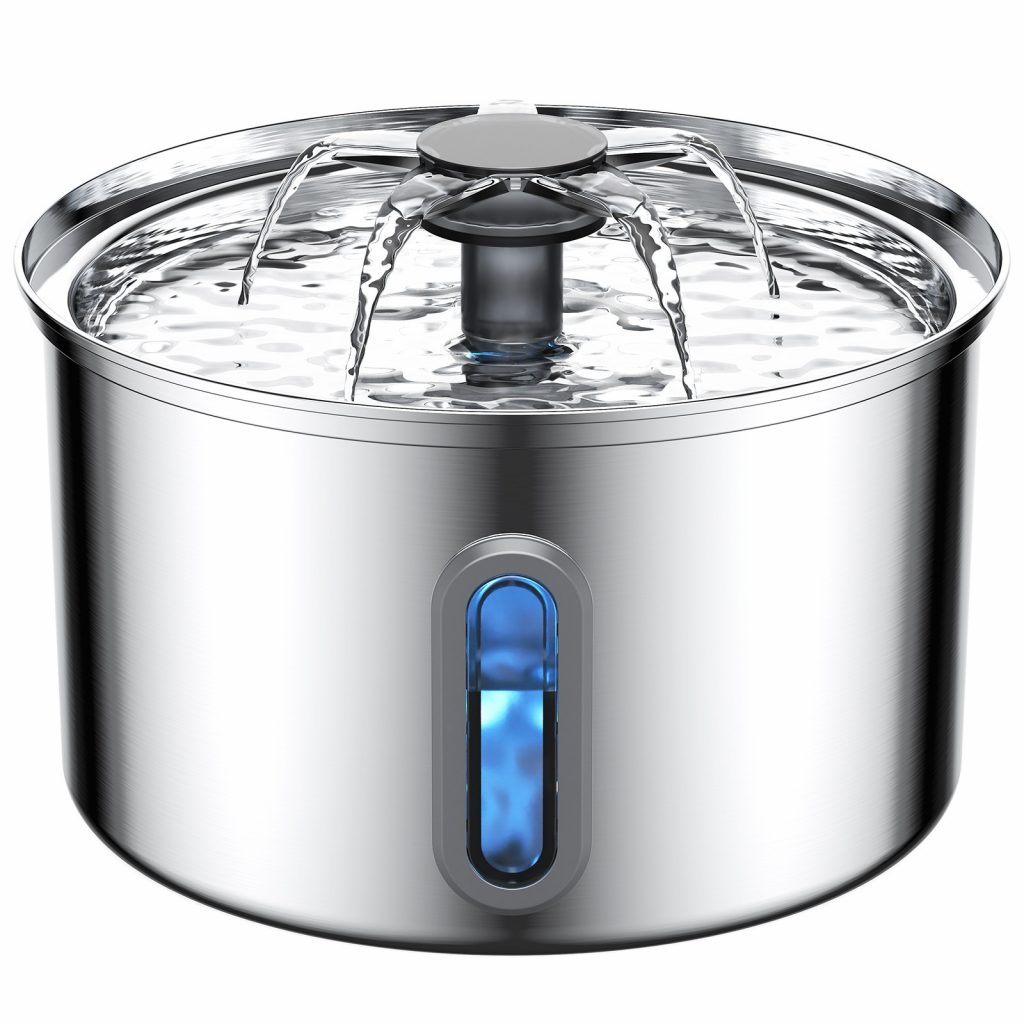
We recommend the Stainless Steel Pet Water Fountain. It keeps a continuous flow of fresh, filtered water available 24/7 — ideal for cats that ignore standing water. The self-refilling system means you never have to worry about the bowl running dry, even if you’re away from home for the day.
Switch to a Stainless Steel or Ceramic Bowl
If you’re still using a plastic bowl, swap it out today. Stainless steel and ceramic bowls are non-porous, easy to sanitize, and don’t affect the taste of water.
Try Flavouring the Water
Some cats respond well to a small amount of tuna juice (in water, not oil), clam juice, or low-sodium chicken broth added to their water. This is a simple trick that can work wonders for picky drinkers.
5. How Much Water Does a Cat Actually Need?
A general guideline is that cats need approximately 50–60 ml of water per kilogram of body weight per day. So a 4 kg (8.8 lb) cat needs roughly 200–240 ml of water daily — about a cup.
Cats eating wet food get a large portion of this through their meals. Cats eating only dry kibble must compensate by drinking significantly more from their water source — which many simply won’t do without encouragement.
American Association of Feline Practitioners (AAFP) recommends monitoring your cat’s water intake as part of routine health tracking, especially in cats over 7 years old who are at higher risk for kidney disease.
| Cat weight | Daily water needed | From wet food (est.) | Must drink | Diet type |
|---|---|---|---|---|
| 2 kg (4.4 lb) | 100–120 ml | ~80 ml | ~30 ml | Wet food |
| 2 kg (4.4 lb) | 100–120 ml | 0 ml | ~110 ml | Dry kibble only |
| 3 kg (6.6 lb) | 150–180 ml | ~120 ml | ~45 ml | Wet food |
| 3 kg (6.6 lb) | 150–180 ml | 0 ml | ~165 ml | Dry kibble only |
| 4 kg (8.8 lb) | 200–240 ml | ~160 ml | ~60 ml | Wet food |
| 4 kg (8.8 lb) | 200–240 ml | 0 ml | ~220 ml | Dry kibble only |
| 5 kg (11 lb) | 250–300 ml | ~200 ml | ~75 ml | Wet food |
| 5 kg (11 lb) | 250–300 ml | 0 ml | ~275 ml | Dry kibble only |
| 6 kg (13.2 lb) | 300–360 ml | ~240 ml | ~90 ml | Wet food |
| 6 kg (13.2 lb) | 300–360 ml | 0 ml | ~330 ml | Dry kibble only |
6. When to See a Veterinarian
While most cases of low water intake can be improved with environmental changes, some situations require immediate veterinary attention:
- Your cat has not drunk any water in more than 24 hours
- You notice rapid weight loss alongside reduced drinking
- Your cat’s gums are pale, white, or very dry
- Your cat is vomiting, has diarrhea, or is visibly in pain
- You see blood in the urine or your cat is straining in the litter box
These could be signs of urinary obstruction, kidney failure, or other serious conditions that require emergency care. Do not wait.
Final Thoughts
A cat that won’t drink water isn’t necessarily being stubborn — they’re often just following millions of years of evolutionary instinct. Your job is to make drinking as natural and appealing as possible.
Start with the basics: move the water away from the food, switch to a ceramic or steel bowl, add wet food to the diet, and — most importantly — consider upgrading to a circulating water fountain. These simple changes can transform a cat that barely drinks into one that sips throughout the day. Your cat’s kidneys will thank you for it.
Frequently Asked Questions
Why does my cat only drink from the tap?
Because running water signals freshness and safety to a cat’s instincts. A circulating pet water fountain mimics this effect and is a great permanent solution.
Is it normal for cats to drink very little?
Cats naturally have a low thirst drive, but they should still drink small amounts regularly — especially if they eat dry food. Monitor their intake and consult a vet if you’re concerned.
Can I add broth to my cat’s water?
Yes! A small amount of low-sodium, unseasoned chicken or fish broth can make water more appealing. Avoid broths with onion, garlic, or high sodium content, which are toxic to cats.
How do I know if my cat is drinking enough water?
Monitor litter box output (healthy cats urinate 2–4 times daily), watch for bright eyes and moist gums, and do the skin turgor test described above.
Leave a Reply
You must be logged in to post a comment.